The Truth vs Lies Toolkit
This is something we’ve become very intentional about in our home.
Our kids are constantly hearing things—through shows, conversations, other children, and the world around them. Those messages begin shaping how they see themselves long before we always notice it. Instead of trying to block everything out, we’ve focused on teaching them how to recognize what is actually true.
Scripture says, “You will know the truth, and the truth will set you free.” That is what we want for our kids. We want them to know truth so they can walk in real freedom, not confusion.
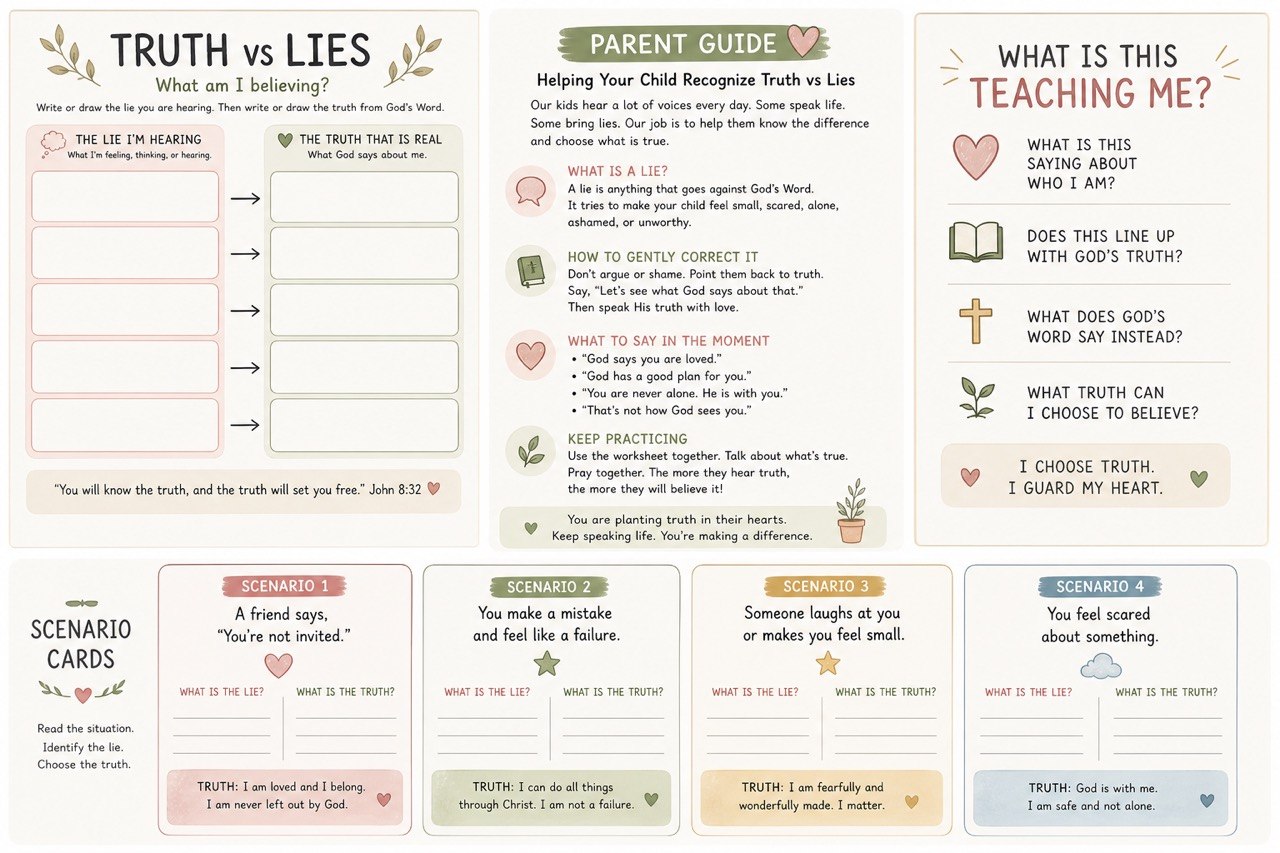
Using this resource in our home is not about creating a rigid routine. It’s about walking through life with our kids and helping them process what they’re thinking and feeling in light of God’s Word. We’ll often sit down together and go through a page, asking simple questions about what they’re experiencing. From there, we guide them back to truth by asking, “What is God saying about that?” and “What do we know is true?” The goal isn’t just to tell them what to think, but to help them learn how to think.
This becomes especially powerful in real, everyday moments. When a child says something like, “I’m not good at this” or “Nobody likes me,” we pause and walk through it together. We ask, “Is that actually true?” and then help them find what is. Over time, they begin to recognize the difference between truth and lies on their own.
Rather than setting aside a perfect time every day, this approach naturally fits into our rhythm. Sometimes it happens during homeschool, sometimes in the middle of a situation, and sometimes in quiet moments when something needs to be addressed. It becomes part of how we lead and guide them, not just another task to check off.
One of the most practical tools we use is the question, “What is this teaching me?” This can be applied anytime—after watching a show, after a conversation, or after a situation that brings up emotions or questions. We’ll ask, “What is this saying about who you are?” and “Does that line up with what God says?” This helps them begin filtering what they hear instead of absorbing everything as truth.
We also walk through real-life scenarios together. These give our kids a chance to think through situations before they face them on their own. By asking, “What is the lie?” and “What is the truth?” they begin building the habit of identifying truth clearly and confidently.
Over time, this builds something strong. Our kids begin to recognize truth more quickly, reject lies more easily, and think with greater clarity. They become more grounded in what God says rather than what they hear around them. Instead of being easily influenced, they learn to filter and discern.
As parents, we are already leading our children every day, whether we realize it or not. When we intentionally teach them how to recognize truth, we are giving them something solid to stand on. We are helping them develop a foundation that will carry them through challenges, pressure, and uncertainty.
At the heart of this is a simple goal: to raise children who know truth and walk in it. Children who don’t automatically accept everything they hear, but who pause and ask what God says first.
That is how we guard their hearts.